.png)
Professional Paint Decontamination Process

Updated: Apr 23

Paint decontamination is an essential step in professional exterior detailing.
Even after a proper wash, vehicles often still have bonded contaminants attached to the paint surface.
These contaminants can include:
• Industrial fallout
• Brake dust particles
• Road tar
• Tree sap
• Rail dust
• Environmental pollution
If these contaminants are not removed, they can interfere with polishing, ceramic coatings, and paint protection.
Professional paint decontamination removes these bonded particles and restores a smooth surface.
This guide explains the professional paint decontamination process used in modern detailing workflows.
If you’re building a complete exterior cleaning workflow, start with our Exterior Detailing Cleaning Guides, which explain safe surface preparation methods used by professional detailers.
Quick Answer: What Is a Paint Decontamination Process?
Paint decontamination removes bonded contaminants that remain on the surface after washing.
Professional detailers typically perform paint decontamination using two methods:
• Chemical decontamination (iron remover, tar remover)
• Mechanical decontamination (clay bar or synthetic clay)
The process usually follows this order:
• Wash the vehicle
• Apply iron remover
• Remove tar contamination
• Clay the paint surface
• Final rinse or wipe down
The goal is restoring a smooth, contamination-free surface before polishing or paint protection.
Why Paint Decontamination Matters
Even clean vehicles can contain microscopic contamination embedded in the paint.
These contaminants can cause:
• Rough paint texture
• Reduced gloss and clarity
• Difficulty applying coatings or sealants
• Long-term paint damage
Paint decontamination restores a clean surface that polishing and protection products can properly bond to.
This step is essential before applying ceramic coatings, paint sealants, or performing paint correction.
Professional Paint Decontamination Workflow
Step 1 — Wash the Vehicle
Before performing paint decontamination, the vehicle must be properly washed.
Use a safe wash process including:
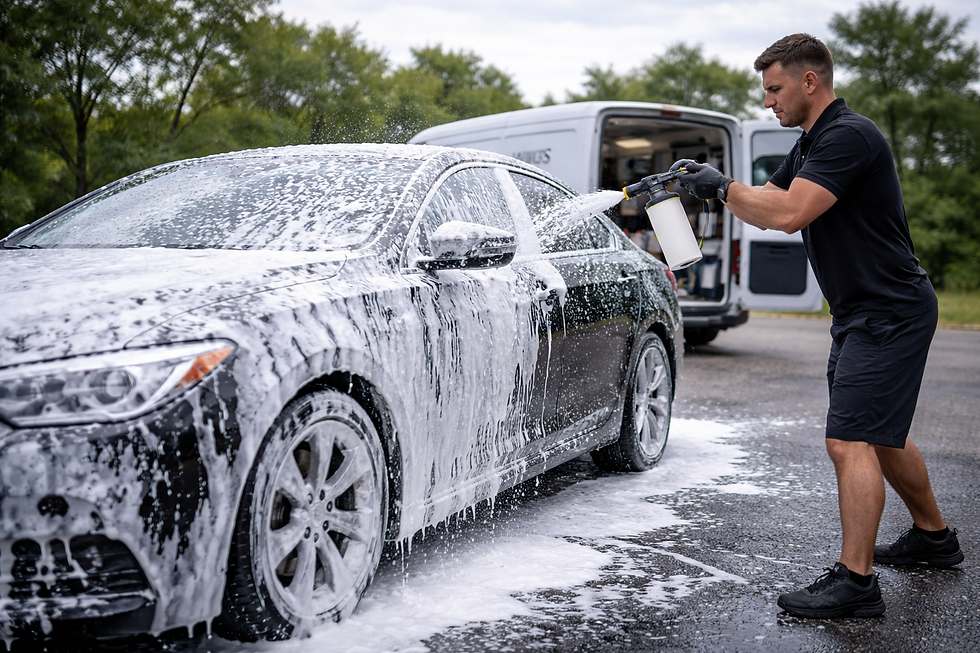
• Pre-rinse
• Foam pre-wash
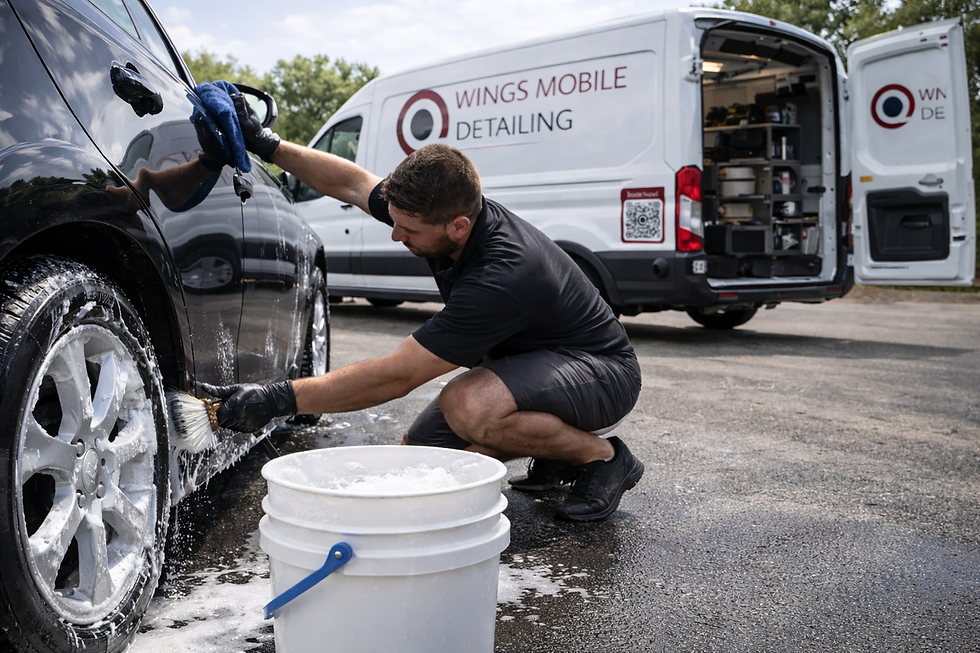
• Contact wash
Removing loose dirt prevents contamination from interfering with the decontamination process.
If you are unfamiliar with this step, review our guide on How to Wash a Car Professionally.
Step 2 — Apply Iron Remover
Iron contamination is extremely common on vehicle paint.
Tiny iron particles from brake dust and industrial fallout embed themselves in the clear coat.
Professional detailers apply an iron remover that chemically dissolves these particles.
When iron remover reacts with contamination, it typically turns purple or red as the particles dissolve.
Allow the product to dwell for 2–5 minutes, then rinse thoroughly.
Step 3 — Remove Tar and Adhesive Contamination
Road tar and asphalt residue often accumulate on lower panels.
These contaminants cannot be removed through washing alone.
Detailers apply tar remover to dissolve:
• Asphalt residue
• Adhesive contamination
• Road oil deposits
After the product breaks down the contamination, wipe or rinse the area clean.
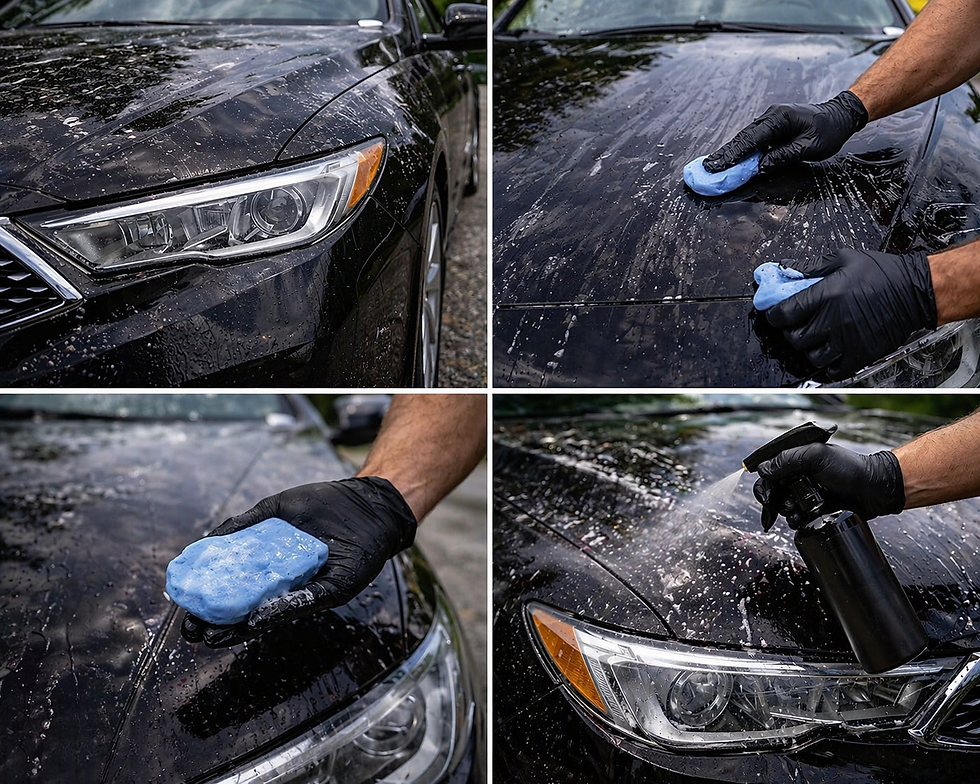
Step 4 — Clay the Paint Surface
Even after chemical decontamination, microscopic particles may remain embedded in the paint.
This is where mechanical decontamination is used.
A clay bar or synthetic clay mitt is lubricated and gently glided across the paint surface.
The clay safely removes:
• Embedded contaminants
• Remaining industrial fallout
• Surface pollution particles
After claying, the paint surface should feel completely smooth.
Step 5 — Final Rinse or Panel Wipe
After decontamination is complete, the vehicle should be rinsed or wiped down.
This removes:
• Remaining chemicals
• Clay lubricant residue
• Loose contaminants
The paint surface is now ready for polishing, sealant application, or ceramic coating installation.
How to Tell if a Car Needs Decontamination
There are several ways to identify contaminated paint.
Common indicators include:
• Rough or gritty paint texture
• Small orange rust spots (iron contamination)
• Tar specks on lower panels
• Reduced paint gloss
A common method used by detailers is the plastic bag test.
By placing a thin plastic bag over your hand and lightly rubbing the paint surface, you can easily feel embedded contaminants.
Common Paint Decontamination Mistakes
1. Skipping the Wash Stage
Decontamination should never be performed on a dirty vehicle.
Loose contamination must be removed first.
2. Using Clay Without Lubrication
Clay bars require lubrication to prevent scratching the paint surface.
3. Overusing Clay
Excessive claying can create unnecessary marring on the paint.
4. Not Using Chemical Decontamination
Iron removers and tar removers reduce the amount of mechanical claying required.
When Should Paint Decontamination Be Performed?
For most vehicles, paint decontamination is recommended:
• Every 6–12 months
• Before paint correction
• Before ceramic coating application
• Before applying paint protection products
Regular maintenance washing helps reduce the buildup of bonded contamination.
Frequently Asked Questions
What is the purpose of paint decontamination?
Paint decontamination removes bonded contaminants that remain on the surface after washing.
Is clay bar safe for car paint?
Yes, when used properly with lubrication, clay bars safely remove embedded contaminants.
Do all cars need paint decontamination?
Most vehicles accumulate contamination over time and benefit from periodic decontamination.
Can washing remove iron contamination?
No. Iron particles require chemical removal using specialized iron remover products.
Final Thoughts: Decontamination Restores Paint Smoothness
Paint decontamination is a critical step in professional exterior detailing.
By removing bonded contaminants, detailers can:
• Restore paint smoothness
• Improve gloss and clarity
• Prepare surfaces for polishing
• Ensure proper bonding of protective coatings
When performed correctly, decontamination dramatically improves the overall finish and longevity of paint protection systems.
Continue Learning
If you’re building a professional exterior detailing workflow, explore:
This article is part of the complete Exterior Detailing Cleaning Guides by Wings Formula Pro.

WINGS FORMULA PRO
Wings Formula Pro is the professional detailing system developed inside Wings Mobile Detailing operations. Built by real-world detailers, our surface-safe chemistry is engineered for modern automotive materials and repeatable results. Learn how exterior, interior, ceramic, controlled pH formulas, and technician-level standards protect vehicles the right way.

Comments