.png)
Exterior Detailing Mistakes That Damage Paint


Exterior detailing is designed to clean and protect a vehicle’s paint while preserving the integrity of the clear coat.
However, when exterior detailing is performed incorrectly, it can actually cause damage to the paint surface rather than protect it.
Many paint defects commonly seen on vehicles are not caused by environmental exposure alone. They are often the result of improper washing and detailing techniques.
These mistakes can lead to:
• Swirl marks
• Scratches in the clear coat
• Water spotting
• Reduced gloss and clarity
• Premature paint deterioration
Professional detailers follow specific processes designed to minimize contact with the paint and prevent contamination from scratching the surface.
This guide explains the most common exterior detailing mistakes that can damage paint and how professional detailing workflows avoid them.
If you’re learning proper exterior cleaning techniques, start with our Exterior Detailing Cleaning Guides, which explain safe washing and preparation methods used by professional detailers.
Quick Answer: What Exterior Detailing Mistakes Damage Paint?
Several common detailing mistakes can damage vehicle paint.
The most common include:
• Washing with dirty tools or towels
• Skipping the pre-wash stage
• Using improper drying techniques
• Claying without proper lubrication
• Using harsh brushes on paint surfaces
These mistakes allow dirt and contamination to scrape across the paint, creating scratches and swirl marks.
Professional detailing methods focus on safe washing, controlled contact, and proper surface preparation to protect the vehicle’s clear coat.
Why Proper Exterior Detailing Matters
Modern vehicle paint is protected by a clear coat layer.
Although this layer protects the underlying paint, it is extremely sensitive to abrasion.
Improper detailing methods can introduce microscopic scratches into the clear coat.
Over time these defects reduce:
• Paint clarity
• Surface gloss
• Overall vehicle appearance
Correct detailing techniques prevent unnecessary abrasion and preserve the paint surface.
Professional workflows are designed to remove contamination before any contact occurs, reducing the risk of scratching.
Common Exterior Detailing Mistakes
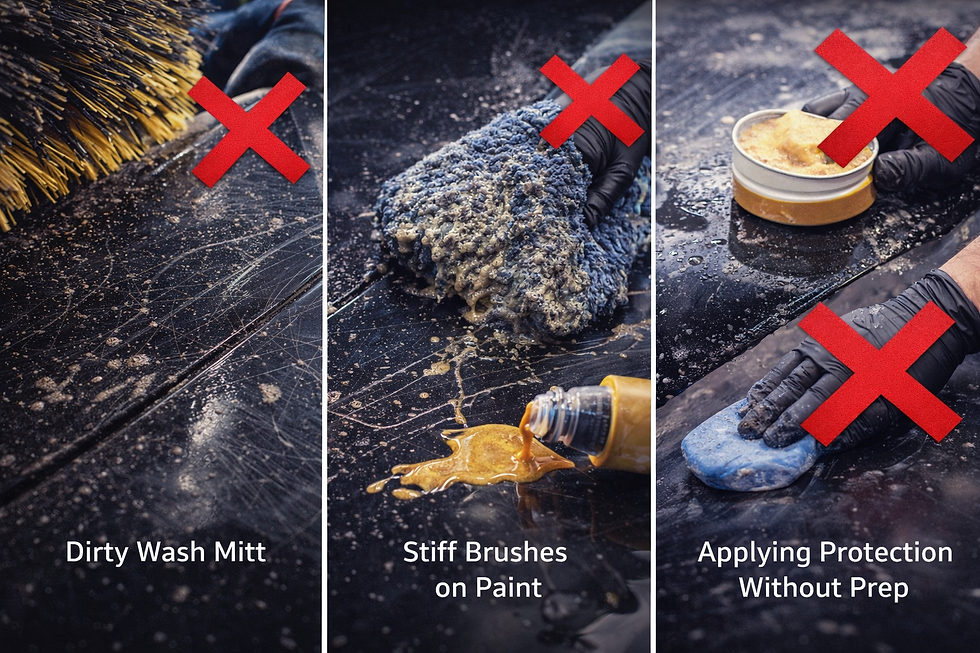
1 — Skipping the Pre-Wash Stage
One of the most damaging mistakes in exterior detailing is washing the vehicle without first removing loose dirt and debris.
When a vehicle is dirty, dust, sand, and road debris sit on the paint surface.
If these particles are rubbed across the paint during washing, they can create scratches.
Professional detailers always begin with:
• A pre-rinse
• A foam pre-wash
These steps loosen contamination so it can be safely rinsed away before the contact wash begins.
If you’re unfamiliar with this step, review our guide on Professional Pre-Wash & Foam Guide.
2 — Using Dirty Wash Mitts or Towels
Wash mitts and towels can easily trap dirt particles.
If these tools are reused without proper rinsing, contamination can accumulate inside the fibers.
When these particles contact the paint surface, they act like abrasive material, scratching the clear coat.
Professional detailers use:
• High-quality microfiber wash mitts
• Multiple towels during washing
• Frequent rinsing using the two-bucket method
These methods reduce the chance of contamination being dragged across the paint.
3 — Washing With Brushes or Harsh Tools
Many automatic car washes and low-quality detailing tools use stiff brushes or abrasive materials.
These tools can create:
• Fine scratches
• Circular swirl marks
• Holograms in the paint
Professional detailers avoid these tools and instead use soft microfiber or wool wash mitts designed specifically for automotive paint.
4 — Improper Car Drying Techniques
Drying a vehicle incorrectly is another common cause of paint damage.
Dragging rough towels across the paint or using contaminated drying cloths can create scratches.
Professional drying methods include:
• Using high-quality microfiber drying towels
• Blotting or gently gliding towels across the surface
• Drying from top to bottom
Many detailers also use air blowers to remove water trapped in crevices before towel drying.
For a detailed explanation, review our guide on Professional Car Drying Techniques.
5 — Claying Without Proper Lubrication
Clay bars are used to remove embedded contaminants from paint surfaces.
However, clay should never be used on dry paint.
Without lubrication, clay can drag across the paint and create marring or scratches.
Professional detailers always use a dedicated clay lubricant or detail spray to allow the clay to glide smoothly across the surface.
This step is explained in our guide on Professional Paint Decontamination Process.
6 — Applying Protection Without Proper Surface Preparation
Another common mistake is applying wax, sealants, or ceramic coatings without properly preparing the surface.
If contamination remains on the paint, protection products may:
• Fail to bond properly
• Trap contamination under the protection layer
• Reduce the durability of the protection
Professional detailers typically perform:
• A proper wash
• Paint decontamination
• Controlled drying
before applying any paint protection products.
Signs That Exterior Detailing Has Damaged Paint
Paint damage caused by improper detailing techniques often appears gradually.
Common indicators include:
• Circular swirl marks visible in sunlight
• Fine scratches across the paint surface
• Reduced gloss and clarity
• Hazy reflections in the paint
These defects are typically caused by abrasion during washing or drying.
In many cases, correcting this damage requires paint correction polishing.
How Professional Detailers Protect Vehicle Paint
Professional exterior detailing workflows are designed to minimize friction and prevent contamination from contacting the paint surface.
A typical safe detailing workflow includes:
• Pre-wash and foam stage
• Safe contact wash
• Wheel and tire cleaning
• Paint decontamination
• Controlled drying process
These steps reduce the risk of scratching while restoring the vehicle’s finish.
To learn the full process, review our guides:
Together, these steps form the complete professional exterior detailing workflow.
Frequently Asked Questions
What causes swirl marks in car paint?
Swirl marks are typically caused by improper washing or drying techniques that drag dirt across the paint surface.
Can automatic car washes damage paint?
Many automatic car washes use abrasive brushes that can create swirl marks and scratches in the clear coat.
Is microfiber safe for car paint?
High-quality microfiber towels are safe when clean and used properly.
However, contaminated or low-quality microfiber can still scratch paint.
How can paint damage from detailing be prevented?
Following proper detailing techniques — including pre-washing, safe washing tools, and controlled drying — helps prevent paint damage.
Final Thoughts: Proper Techniques Protect Paint
Exterior detailing should protect a vehicle’s paint, not damage it.
Many paint defects are the result of improper detailing methods rather than environmental exposure.
By avoiding common detailing mistakes and following professional cleaning techniques, vehicle owners and detailers can maintain the paint’s clarity, gloss, and long-term durability.
Using proper tools, safe washing methods, and controlled workflows dramatically reduces the risk of scratching or damaging the paint surface.

WINGS FORMULA PRO
Wings Formula Pro is the professional detailing system developed inside Wings Mobile Detailing operations. Built by real-world detailers, our surface-safe chemistry is engineered for modern automotive materials and repeatable results. Learn how structured workflows, controlled pH formulas, and technician-level standards protect vehicles the right way.


Comments