.png)
Hydrophobic Coating Explained: How Water Repellency Works in Car Detailing

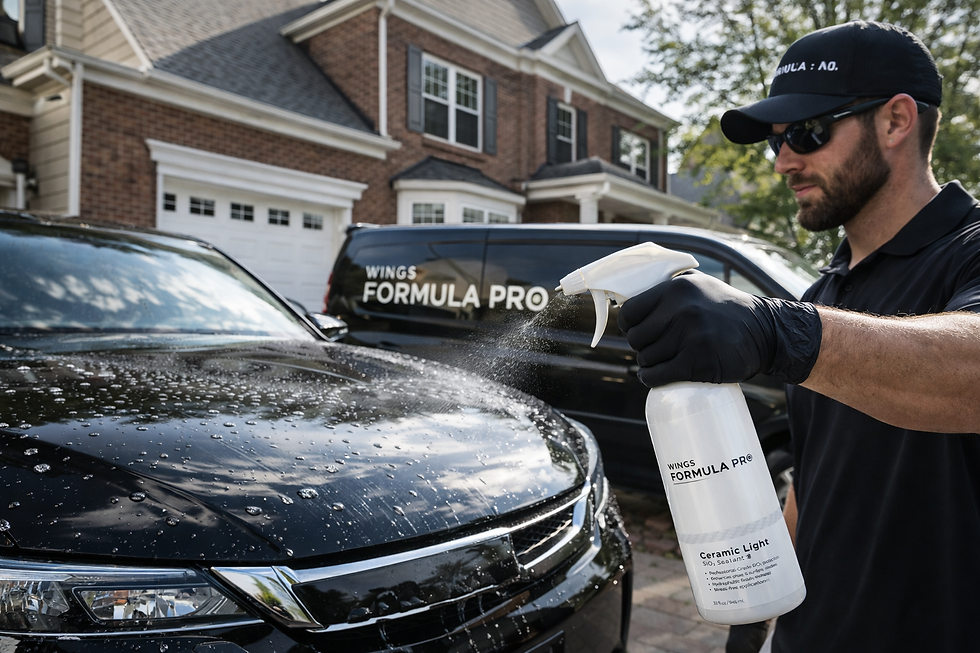
A hydrophobic coating is a surface protection layer that causes water to bead and slide off automotive paint, helping improve maintenance, drying, and contamination removal. It have become one of the most talked-about features in modern automotive detailing.
If you’ve ever seen water bead tightly and roll off a vehicle’s surface, you’ve already seen hydrophobic behavior in action.
But what exactly is a hydrophobic coating, and how does it work?
This guide explains how hydrophobic coatings function, why they matter in professional detailing, and how they fit into a complete paint protection workflow.
If you’re building a full protection system, start with our Ceramic & Protection Guides, where we break down everything from surface preparation to long-term maintenance.
Quick Answer: What Is a Hydrophobic Coating
A hydrophobic coating is a protective layer that repels water, causing it to bead and slide off the surface instead of spreading.
This behavior reduces water retention, helps minimize contamination buildup, and improves drying efficiency.
Hydrophobic properties are commonly found in ceramic sealants, ceramic coatings, and advanced paint protection products.
What Does “Hydrophobic” Actually Mean
The term “hydrophobic” literally means water-repelling.
From a surface chemistry perspective, hydrophobic coatings reduce the surface energy of the paint.
Why Surface Energy Matters
Water naturally spreads across high-energy surfaces.
When a surface has low energy (like a ceramic-coated surface), water cannot spread easily and instead forms tight beads.
This is what creates the visual effect detailers look for:
tight water beads
fast water runoff
minimal surface wetting
How Hydrophobic Coatings Work on Automotive Paint
Hydrophobic coatings form a thin protective layer over the vehicle’s clear coat.
This layer alters how water and contaminants interact with the surface.
The Science Behind Water Beading
Instead of bonding to the surface, water molecules cluster together due to surface tension.
This creates:
rounded water beads
reduced contact area with the paint
easier removal during rinsing or drying
Why Hydrophobic Behavior Matters in Car Detailing
Hydrophobic performance is not just about aesthetics.
It plays a key role in maintaining the condition of the vehicle’s paint.
Key Benefits of Hydrophobic Coatings
Faster drying after washing
Reduced water spotting risk
Easier contamination removal
Improved maintenance efficiency
Enhanced gloss and surface clarity
Hydrophobic behavior helps support proper maintenance, especially when combined with correct washing techniques.
For a complete process, see our guide on how to wash a car professionally.
Hydrophobic Coating vs Protection: What’s the Difference
One of the most common misconceptions is that hydrophobic behavior equals protection.
It does not.
Hydrophobic Effect vs Actual Protection
Hydrophobic behavior:
affects water interaction
Protection:
resists UV, chemicals, and contamination
A product can bead water but still provide limited durability or protection.
Professional ceramic products combine both hydrophobic properties and protective performance.
To understand the difference, see our guide on ceramic sealant vs coating vs wax.
Types of Hydrophobic Coatings Used in Detailing
Not all hydrophobic coatings perform the same.
Common Categories
Ceramic Sealants (SiO₂-Based)
strong hydrophobic effect
easier application
typically last 3–6 months
Professional Ceramic Coatings
long-term durability
stronger chemical resistance
multi-year lifespan
Spray Sealants and Maintenance Boosters
temporary hydrophobic enhancement
used to refresh existing protection
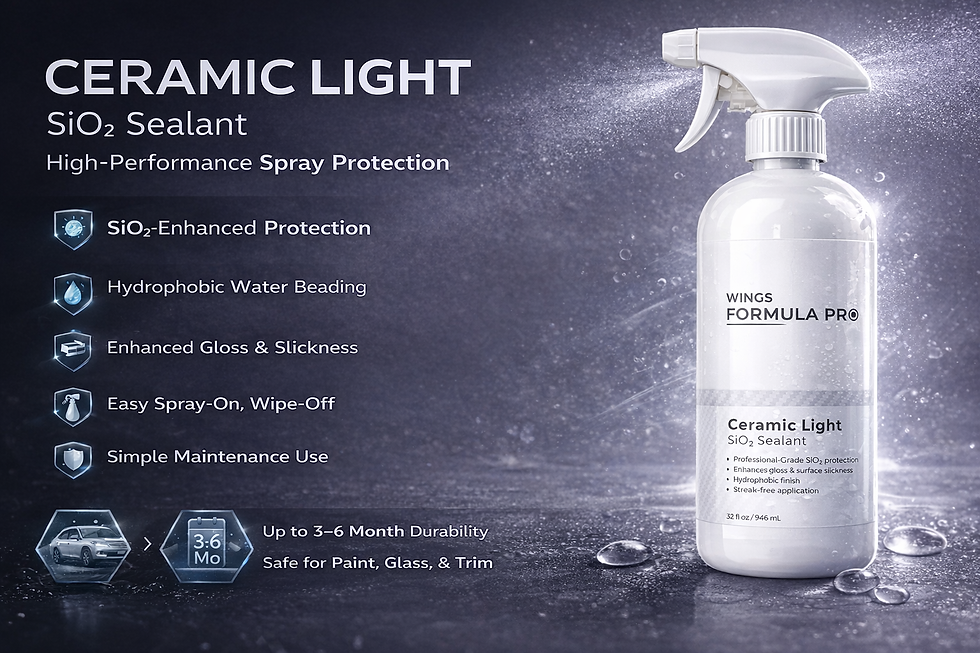
Products like Wings Formula Pro Ceramic Light are designed to deliver strong hydrophobic behavior while remaining easy to apply and maintain.
What Affects Hydrophobic Performance Over Time
Hydrophobic performance naturally changes over time.
Common Factors That Reduce Beading
surface contamination buildup
improper washing techniques
use of harsh chemicals
environmental exposure (salt, pollen, pollution)
In many cases, reduced beading is caused by contamination — not coating failure.
This is why proper ceramic coating maintenance is essential.
How to Maintain Hydrophobic Performance
Maintaining hydrophobic behavior requires consistent care.
Best Practices
wash the vehicle every 1–2 weeks
use pH-neutral automotive shampoos
avoid aggressive detergents
dry properly to prevent water spots
apply maintenance boosters when needed
For a full breakdown, see our guide on maintenance after ceramic application.
Hydrophobic Coating and Water Spots
Hydrophobic coatings reduce water retention — but they do not eliminate water spots.
Why Water Spots Still Happen
When water evaporates, minerals remain behind.
If not removed, they can bond to the surface and affect both gloss and hydrophobic performance.
Proper drying and contamination removal are essential.
When Hydrophobic Behavior Starts to Fade
Over time, water beading may appear weaker.
Signs to Watch For
flatter water beads
slower water runoff
reduced surface slickness
more contamination sticking to paint
This does not always mean protection is gone — often the surface just needs cleaning or boosting.
Hydrophobic Coating in a Complete Detailing Workflow
Hydrophobic coatings are just one part of a larger system.
The Full Process
Paint decontamination
Surface preparation
Protection application
Maintenance washing
Periodic reapplication or boosting
Skipping preparation can reduce the effectiveness of hydrophobic performance.
For more detail, see paint prep before protection.
Frequently Asked Questions
Does hydrophobic coating mean the car stays clean?
No. It helps reduce contamination sticking, but regular washing is still required.
Is stronger water beading always better?
Not necessarily. Consistency and durability matter more than extreme beading.
Can hydrophobic coatings wear off?
Yes. All coatings degrade over time depending on environment and maintenance.
Can you restore hydrophobic behavior?
In many cases, yes — through proper washing or applying a maintenance booster.
Final Thoughts: Hydrophobic Coating Is About Performance, Not Just Looks
Hydrophobic coatings are one of the most visible features of modern detailing, but their value goes beyond appearance.
They improve maintenance efficiency, support paint protection systems, and help extend the lifespan of ceramic products.
When combined with proper preparation and maintenance, hydrophobic coatings become a key part of a professional detailing workflow.
Products like Wings Formula Pro Ceramic Light are engineered to provide consistent hydrophobic performance while remaining practical for real-world use.
Continue Learning
If you’re building a complete detailing system, explore:
These guides are part of the Ceramic & Protection Guides by Wings Formula Pro, designed to help detailers build consistent, high-performance workflows.

WINGS FORMULA PRO
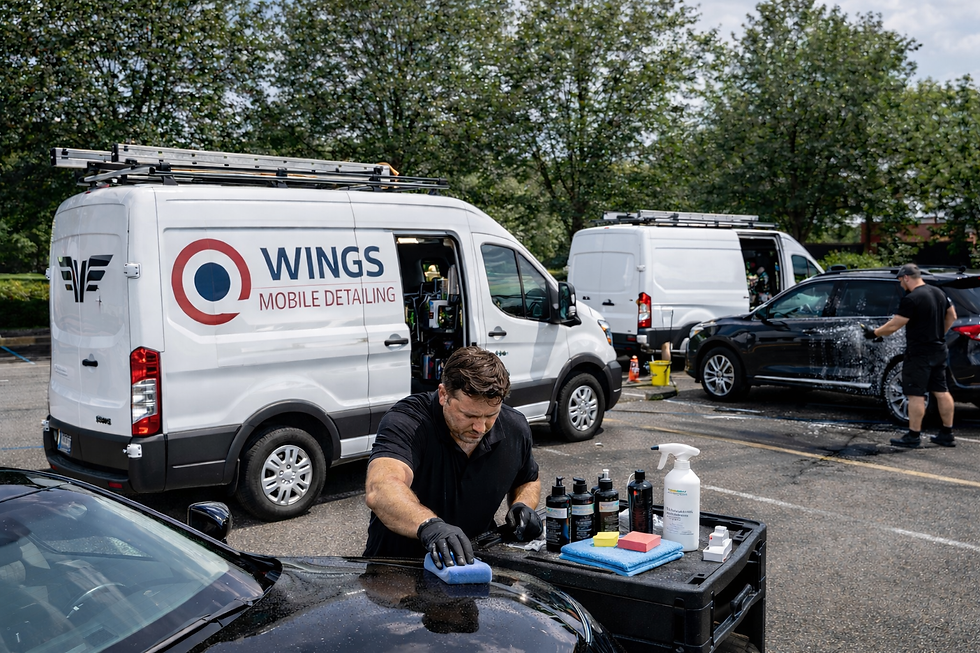
Wings Formula Pro is the professional detailing system developed inside Wings Mobile Detailing operations. Built by real-world detailers, our surface-safe chemistry is engineered for modern automotive materials and repeatable results. Learn how structured workflows, controlled pH formulas, and technician-level standards protect vehicles the right way.


Comments